
Podiatry
Ingrown Toe Nails
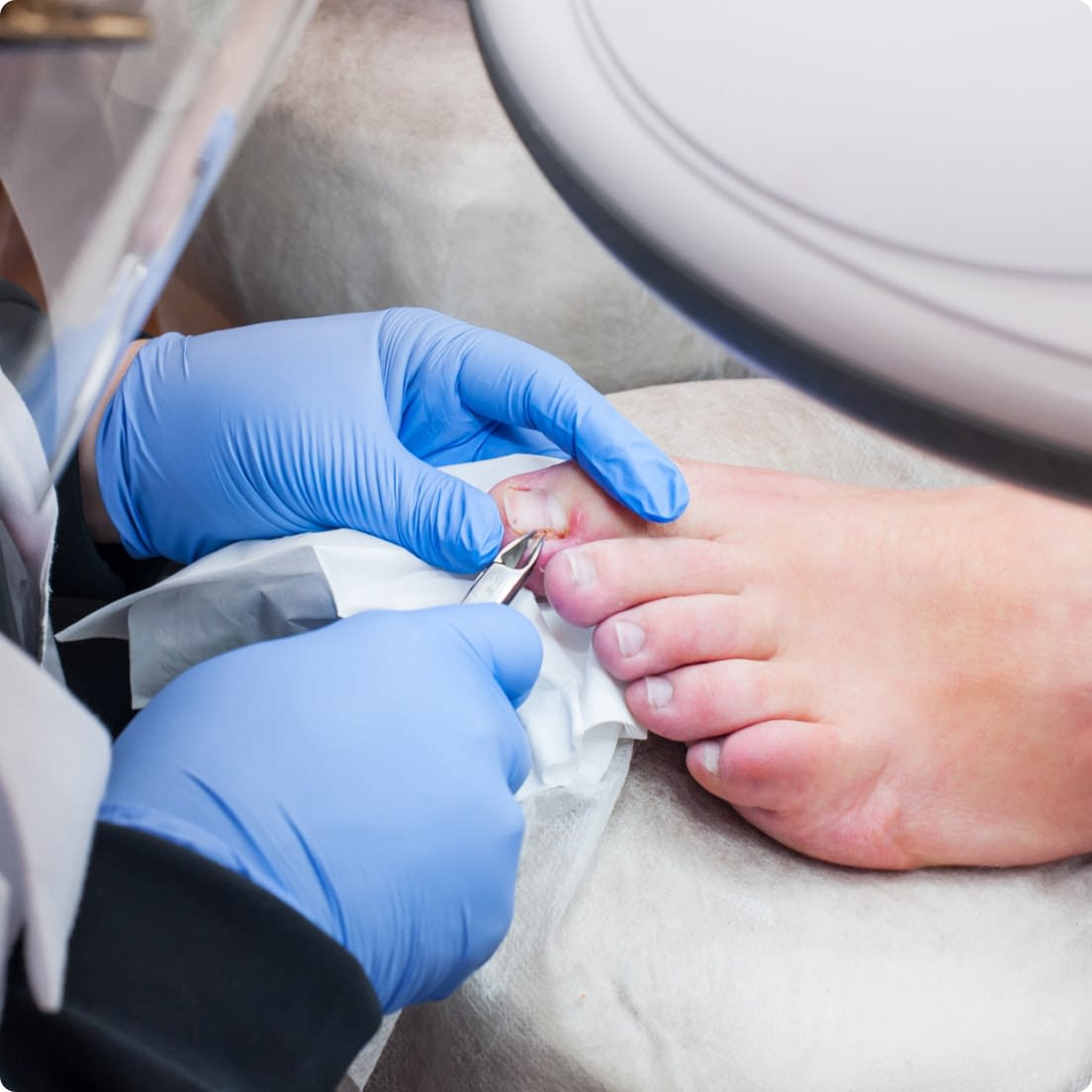
Ingrown toe nails are one of the most common conditions treated at the Clinic. An ingrown toenail, also known as onychocryptosis or unguis incarnates, occurs when a sharp corner of the toenail digs into the skin at the end of or side of the toe. The result is extremely painful, and your toe will become red, swollen and tender. It’s usually the big toe that’s affected, on one or both sides.
Causes
- The shape of the nail that is curved
- Poor cutting of a curved toenail
- Brittle nails
- Nail ‘picking’.
- Damage to the nail following trauma.
- Tight footwear, tight hosiery and tight socks
- Excessive sweating makes the skin moist
- Foot deformity such as a bunion, hammer toes or excessive pronation of the feet
- Sporty people are more prone to ingrown toenails.
Signs & Symptoms
The surrounding nail becomes red and painful with mild swelling. It may feel warm to the touch, but you will not have a fever. Later, extra tissue will grow around the sharp point of the nail. A yellowish fluid may begin. Sometimes an infection develops. In this case, the swelling will become worse, and there may be white or yellow colour secretion from the area.
Treatment & Cost
Nail Cut Only Cost £18.00
Nail Surgery From £250.00
Podiatry
Verrucae
Verruca are warts on the soles of your feet. They may have tiny black dots in the centre – these are where blood has clotted in tiny blood vessels on the surface of your skin. They may be painful when you put weight on them.
Causes
One of the most common foot problems is verrucae, caused by the Human Papillomavirus (HPV). The wart virus is highly contagious and is most likely to be caught by walking barefoot in damp conditions such as swimming pools, showers or gyms etc.
Signs & Symptoms
Verrucae can be single or multiple. The multiple types are usually ‘mosaic’ and are in clusters. There can be more than one ‘single’ but they remain individual. Often small black blood vessels are visible. The surface may look like a cauliflower and vary in vessels are visible. The colour can be grey, yellow, red or brown.
Treatment & Cost
The general rule is that if the verrucae does not hurt treatment is not necessary. The body’s own immunity can destroy the virus. Should they become painful and starts to spread, treatment will be necessary.
£18.00 per session
Podiatry
Fungal Nail
Fungal nail is a type of infection caused by dermatophytes or yeast. Some people are more susceptible to fungal nail than others. There are a number of treatments for fungal nail, your podiatrist will advise you on the one most suitable for you. It is important to remember that the treatment of fungal nail takes time and patience; this is because it takes time for new, uninfected nail to grow through. If the whole nail is infected this can take up to one year.
Signs & Symptoms
Nails may appear thick, yellow and cracked, with debris beneath the nail plate.
Treatment Cost
1st Treatment Cost £39.00
Subsequent Treatment Cost £18.00

Podiatry
Corns & Callus
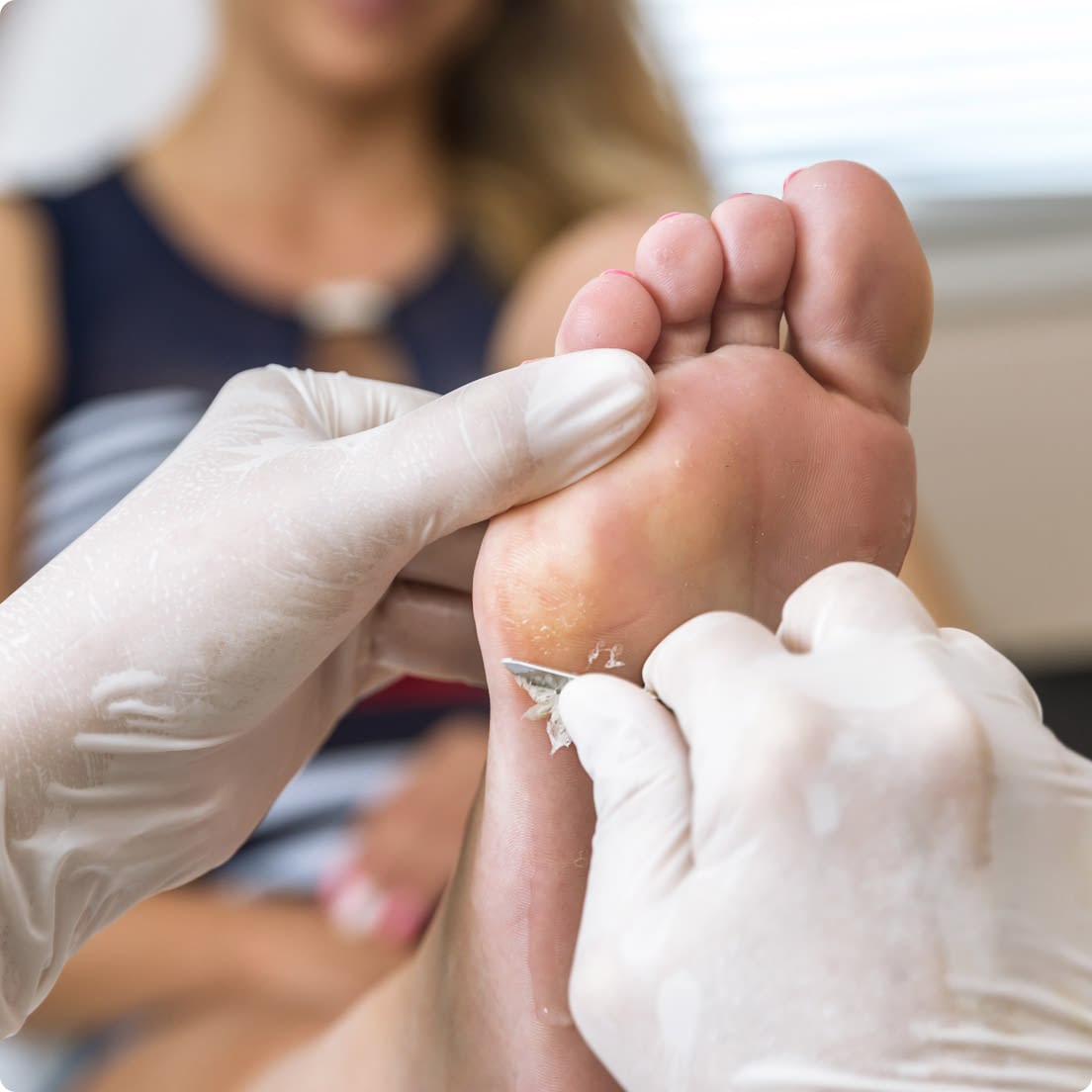
Corns and Callus are hard or thick areas of skin that can be painful. They are not often serious. Callus and corns are one of the most common problems seen by podiatrists. More often than not hard, rough and dry skin is unsightly rather than painful. However, irritation can lead to calluses which can be both painful and stubborn to remove.
Causes
Too much pressure can be from causes such as:
• Inappropriate footwear, i.e. tight footwear.
• Bony deformities, such as hammer toe – the joint of the hammer toe is an area for increased pressure.
• Bony prominence.
• Biomechanical or gait abnormalities that cause. pressure under different areas of the soles of the feet.
Signs & Symptoms
Calluses are usually of a yellow colour, round or oval in shape but larger than corns. They often have ridged lines on their surface and become glassy skin over time. Many people have dry, hard, rough skin on their feet that doesn’t cause any discomfort. However, such areas may be unsightly and can lead to calluses and or corns – which are very painful and hard to remove.
Treatment & Cost
£33.00 (including Nail Cut)
Podiatry
Podiatry & Children
Children’s feet are very different to an adult’s foot & go through a complex process of developmental stages. At infancy most bones of the foot are cartilage, and sometimes don’t fully form until 18 years old. This makes the feet more flexible. A podiatrist can assess a child’s feet and lower limb problems at any age and work with you if there are any concerns.
Common Foot Concerns for Parents
• If your child complains of persistent pain in the feet or legs
• Notice uneven shoe wear patterns
• The feet appear to be in an unusual posture (in-toeing) or appear to have an unusual gait (toe walking)
• Notice any skin lesions such as rashes, lumps or bumps in the feet
• Your child constantly trips or falls
Common Problems for Children
• Growing pains
• Flat feet
• In toeing or out toeing
• Toe walking
• Heel and knee pain
• Knock knees or bow legs
• Acute injuries
• Nail and skin problems (warts, ingrown nails)
Assessment for Children’s Feet
A thorough assessment of your child’s feet involves a detailed medical history and a full biomechanical assessment. Treatment can involve:
• Strapping
• Orthotics
• Footwear advice/modifications
• Exercises and stretches