
Bio-mechanics
Plantar Fasciitis
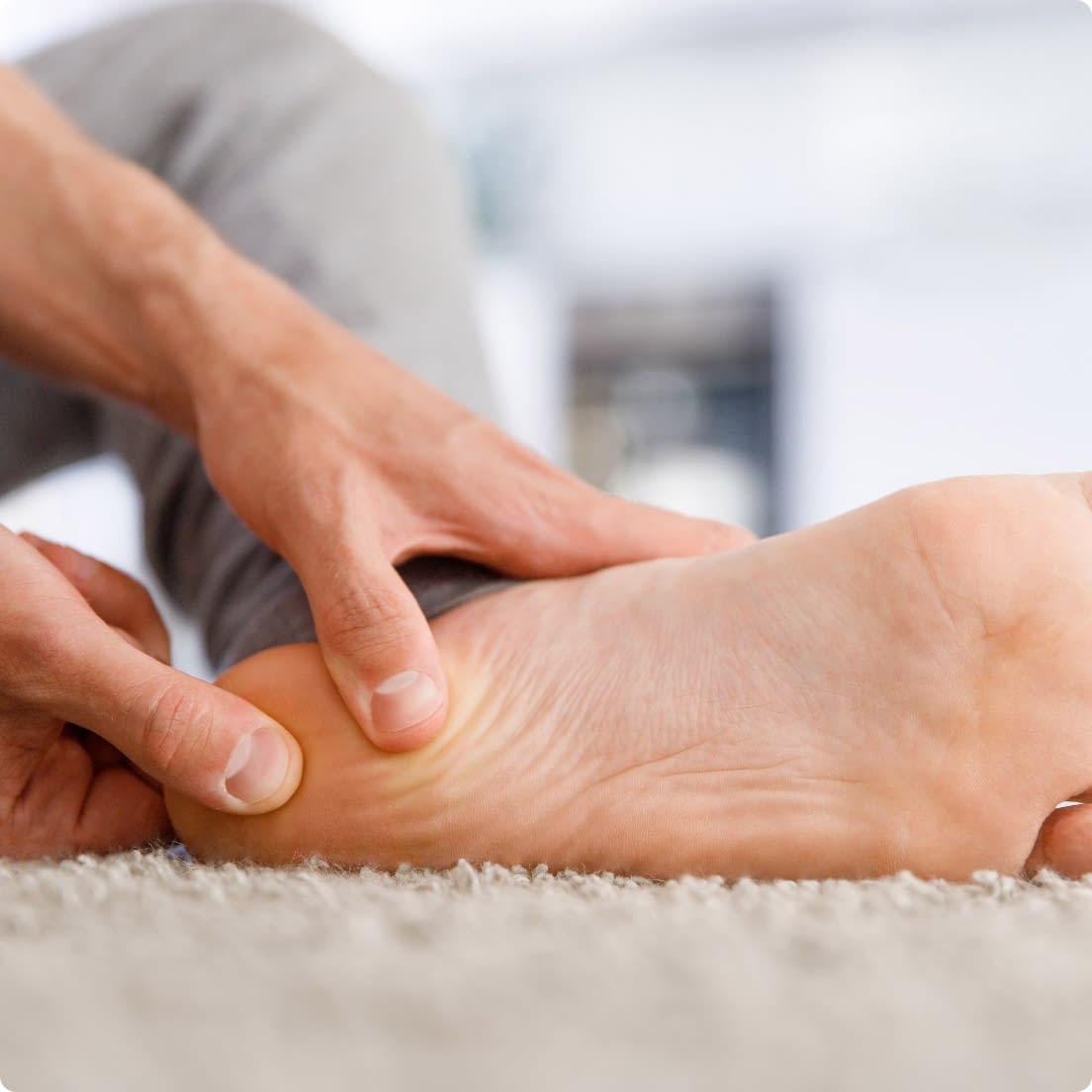
Plantar fasciitis is a common overuse injury felt at the bottom of the heel. Plantar fasciitis occurs when the plantar aponeurosis or the plantar fascia which supports the arch of the foot becomes irritated and inflamed. Issues involving the plantar fascia usually revolve around poor biomechanics. In most cases a Biomechanical Assessment leads to the fitting of bespoke prescriptive orthotics.
Signs & Symptoms
• Pain at the bottom of the heel
• Pain in the arch of the foot
• Pain increases after physical activity
• Pain increases early in the morning or when weight-bearing after prolonged periods of rest
• Pain is progressive over time
Diagnosis
To confirm a diagnosis, the clinician will observe the patient’s past medical history, perform a physical examination and inquire about when pain is active during the day.
Treatment & Cost
Plantar fasciitis can be treated conservatively. Conservative treatments include proper stretching of the calves, icing, avoiding barefoot walking and modifying physical activities After a few weeks and if little recovery is seen, we would recommend a Biomechanical Assessment to produce bespoke prescriptive orthotics, padding, shoe modifications, physical therapy and treatment options to properly relieve pain and strengthen the necessary tissues.
Bio-mechanics
Orthotics
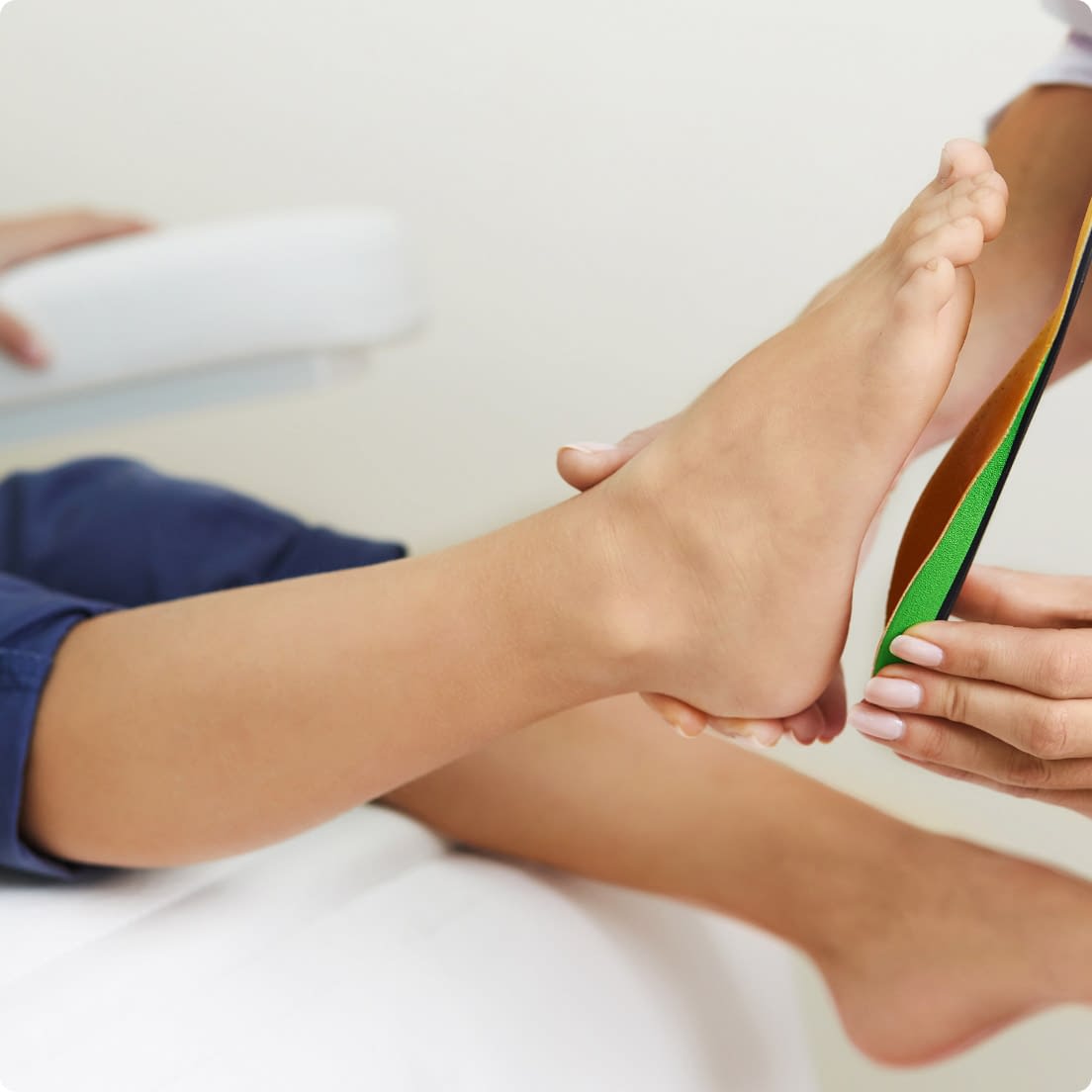
Foot orthoses (commonly called “orthotics”) are devices inserted into shoes to provide support for the foot by redistributing ground reaction forces acting on the foot joints while standing, walking or running. They may be either pre-moulded (also called pre-fabricated) or custom made. They are used by everyone from athletes to the elderly to accommodate biomechanical deformities and a variety of soft tissue conditions. Custom-made foot orthoses are effective at reducing pain for people with painful high-arched feet, and may be effective for people with rheumatoid arthritis, plantar fasciitis or hallux valgus (“bunions”). Foot orthoses may also be used in conjunction with properly fitted orthopaedic footwear in the prevention of foot ulcers in the at-risk diabetic foot.
Bio-mechanics
Seven Of The Most Common Signs You May Need Orthotics
1. You have foot pain or swelling
If you’re experiencing foot pain or swelling during or after simple everyday activities (standing, walking around), it’s time to see a podiatrist. You don’t need to live with unnecessary foot pain, and orthotics might solve the problem. And if orthotics aren’t required? Your podiatrist will investigate the cause of your discomfort, and provide advice on correct footwear and appropriate exercises to help get you back on track.
3. You have a flat foot or high arch
If you have flat feet – with little or no arch – you may experience foot pain or overpronation (inward rolling of the foot). Orthotics can help to relieve pressure on the arch and reduce rolling. Similarly, orthotics may be prescribed in the case of high arches, which can lead to toe issues, corns, calluses, foot pain and ankle instability.
5. Your shoes are wearing unevenly
Another of the clearest signs you might need orthotics can be revealed by a quick glance at your footwear. A sole that is more worn on the inside is a sign of pronation (inward rolling); while supination (outward rolling) will cause wear to the outer side of your shoe. Or maybe one shoe is more worn than the other, which is a sign of different leg lengths. All of these issues should be addressed – possibly with corrective footwear or inserts – to prevent joint pain and dysfunction.
7. You have diabetic foot complications
As they help to evenly distribute pressure, orthotics will often be prescribed in the management of diabetic foot complications.
Orthotics can be very beneficial in correcting your gait, providing arch support and evenly distributing pressure across the foot. In this way they can help prevent and alleviate pain and swelling, corns and calluses, correct your posture, and even help manage back pain and headaches.
2. You have sharp heel pain
Sharp heel pain, especially when experienced first thing in the morning, can be a sign of plantar fasciitis. (As well as a sign you might need orthotics.) This common foot complaint occurs due to inflammation of the plantar fascia – the thick band of tissue running from your heel bone all the way to your toes. Supporting the foot’s arch, the plantar fascia acts as a shock absorber. It is more susceptible to inflammation if you’re overweight, have tight Achilles, high arches or flat feet, or spend a lot of time standing or wearing high heels.
Custom-made orthotics can help alleviate symptoms by providing additional arch support or heel cushioning.
4. Problems with balance or are falling over
Collapsed arches can occur in older adults, leading to flat feet-related balance problems. Orthotics may be helpful in providing stability and reducing discomfort and falls.
6. You’ve had a lower limb injury
Recent injuries to your lower limbs may affect the way you walk. It is important to make sure your feet are properly supported and you are well aligned and moving efficiently. Orthotics can help with this, and reduce the likelihood of further pain or injury.